Checking Their Own Numbers: How 50-Something Britain Became Its Own GP

Photo: British School, Public domain, via Wikimedia Commons
The waiting room that never comes
Ask around any group of Brits in their late forties and fifties and you'll hear the same story. Blood pressure readings flagged at a pharmacy check. A referral that never quite arrives. An appointment offered three months out — for a condition that doesn't wait three months.
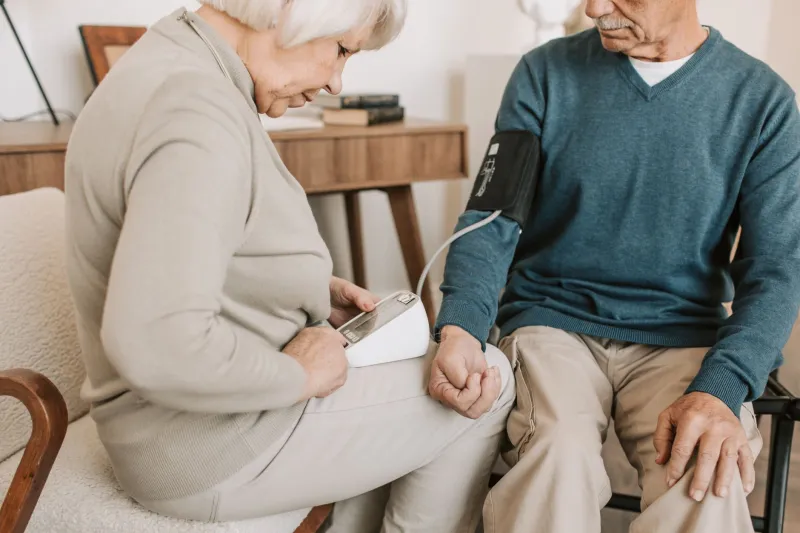
So people have done what Britons do best: improvised. Home blood pressure monitors have flown off the shelves, smartwatches now track heart rate and rhythm on the school run, and a generation that once left everything to the GP surgery is checking its own numbers over the morning brew.
The DIY health revolution in the kitchen
The kit is cheap now. A validated upper-arm blood pressure monitor costs less than a tank of petrol. Smartwatches that once counted steps now nudge wearers about elevated resting heart rates and irregular rhythms. Some people are even keeping spreadsheets — genuinely, spreadsheets — of morning and evening readings.
And honestly? Much of it is working. People who measure at home tend to understand their condition better. They spot patterns a rushed ten-minute appointment would miss: readings that spike after poor sleep, settle after a walk, climb after a salty weekend. They arrive at the GP — when they finally get there — with evidence rather than vague recollections.
Why the 40s and 50s are the danger zone
This is the decade when cardiovascular risk quietly accumulates. Blood pressure creeps up. Blood sugar control loosens. Nothing dramatic happens — no symptoms, no drama — which is precisely why waiting for a crisis is such a poor strategy.
The people self-monitoring have figured out something the system hasn't caught up with: that the most valuable health data about their lives is being generated on an ordinary Tuesday, not in a clinic.
The empowerment — and the pitfalls
Let's be honest about the downsides, because there are real ones.
Anxiety loops. Some people measure fifteen times a day and panic over normal fluctuation. Blood pressure moves constantly; a single high reading is not a diagnosis.
Poor technique. Wrist monitors, wrong cuff position, measuring straight after a cuppa — bad readings lead to bad conclusions.
Self-diagnosis drift. A monitor can tell you your numbers. It cannot tell you what they mean for you, or what else might be going on. Anyone seeing consistently high readings still needs a clinician — home monitoring complements the NHS, it doesn't replace it.
False reassurance. A decent reading on a good day can mask a trend that needs attention. Numbers only mean something in context, over time.
Where daily routines fit into the self-care toolkit
What separates the people using this well from the people spiralling is structure. The sensible self-monitorers we hear from tend to share a few habits:
- They measure at consistent times — morning, before coffee, arm supported, seated calmly
- They log readings over weeks, not hours, and look at trends rather than single numbers
- They treat monitoring as one pillar among several: movement, diet, sleep, stress
- Increasingly, they add a daily natural support routine into the mix — things like nutritional supplements formulated for blood pressure and blood sugar, taken alongside — not instead of — medical advice
That last point is where the culture is shifting. Monitoring tells you where you are; daily habits decide where you're heading. People who can't get timely NHS support are building their own stack: a validated cuff, a watch that nudges them to move, a diet with fewer refined carbs, and natural formulations that support healthy circulation and glucose metabolism.
A gentler contract with the NHS
Nobody chose this arrangement. But there's a version of it worth keeping even when appointments improve. A patient who arrives with a month of home readings, an honest picture of their diet, and a working daily routine is a patient any GP can actually help.
The middle-aged Brits running their own health dashboards aren't abandoning the NHS — they're meeting it halfway, because waiting passively no longer feels like an option. If you're going to become your own doctor, do it properly: measure sensibly, act on trends rather than blips, keep your GP in the loop, and build the daily habits — diet, movement, and natural support — that make the numbers worth checking in the first place.