The Allotment Effect: Why Britain's Grow-Your-Own Generation May Have Stumbled Onto Better Blood Pressure Without Trying
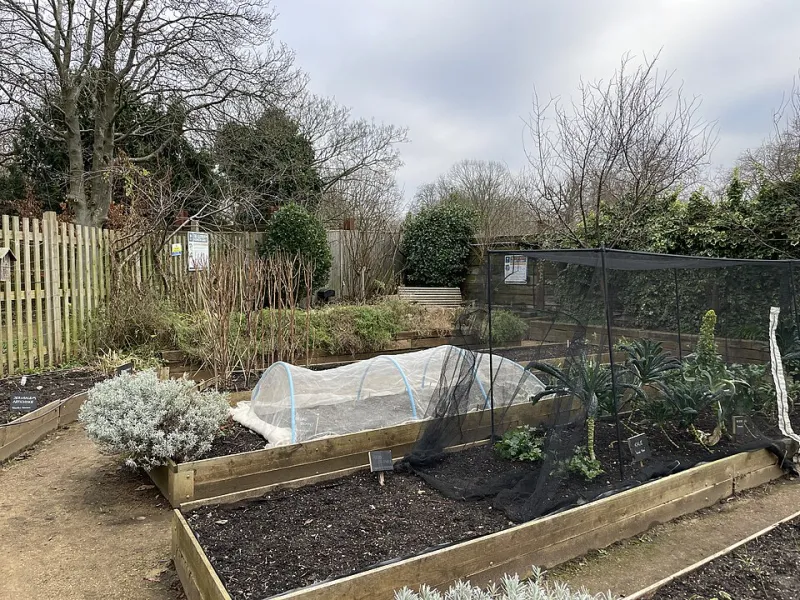
Photo: Mr Ignavy , CC BY-SA 2.0, via Wikimedia Commons
There's a waiting list in Sheffield that's over four years long. In parts of London, people put their names down for an allotment the same week they move into a flat nearby. Britain, it turns out, is in the middle of a grow-your-own revival — and what's fascinating from a health point of view is who's joining and what's happening to them.
Ask around at any allotment association and you'll hear the same pattern: the folk who've had a plot for a decade tend to talk about their numbers — blood pressure, blood sugar, the lot — with a certain calm. Not because they're health obsessives. Most of them will tell you they're just "having a go at some runner beans". But dig into what a plot actually does to a person's week, and you start to see why some researchers have taken to calling it the allotment effect.
A Workout That Doesn't Feel Like One
Nobody at the allotment is doing HIIT. Nobody's tracking steps or wearing a heart rate strap (well, hardly anyone). Yet the physical reality of tending a plot is remarkable: digging, bending, hauling watering cans, wheelbarrowing compost, kneeling, reaching, repeating.
Studies of allotment gardeners — including work from UK universities — have found gardeners regularly clock up levels of weekly moderate activity that public health guidelines would happily sign off on. The difference is that it doesn't register as exercise. It registers as "getting the onions in before the rain".
For blood pressure, that steady, regular movement matters. Moderate activity most days helps arteries stay elastic, supports healthy circulation and helps keep weight in a sensible range — all of which nudge readings in the right direction over time. And because allotmenteering is low-impact and self-paced, it's something people keep doing into their seventies and eighties, which is precisely when consistency pays off most.
Daylight, the Free Supplement
Here's a benefit that rarely makes the brochures: light. Plot holders are outdoors in the morning and midday hours, often several times a week, in a way that even committed dog walkers sometimes aren't.
Morning daylight exposure helps anchor your circadian rhythm, which in turn supports better sleep — and poor sleep is quietly linked to raised blood pressure and wonky blood sugar control. There's also the vitamin D angle. Despite living on an island with famously unreliable weather, a large chunk of UK adults run low in vitamin D, particularly in winter, and low levels have been associated with poorer metabolic health.
An allotment doesn't fix the British climate. But it does get you outside on the grey days as well as the glorious ones, and that accumulated exposure adds up.
The Diet Shift Nobody Had to Preach
Walk back from a plot in August with a trug full of courgettes, beans and the odd wonky carrot, and the supermarket's ready meal aisle loses some of its pull.
Growers routinely report eating more vegetables — unsurprisingly, since they're drowning in them — and fewer ultra-processed foods. That matters doubly for anyone watching blood pressure and blood sugar. Less processed food usually means less hidden salt, less added sugar and fewer refined carbohydrates. More homegrown veg means more potassium (which counterbalances sodium), more fibre and a gentler glucose curve after meals.
There's also the beetroot connection. It's one of the easiest crops to grow in British soil, and it happens to be one of the most researched vegetables for blood pressure, thanks to its natural nitrates. Garlic, another allotment staple, has its own long folk history and a growing body of scientific interest. It's almost as if the traditional allotment planting list was drawn up by someone with a quiet instinct for cardiovascular health.
The Stress Side of the Fence
Then there's the bit that's hardest to measure and possibly most important: what a plot does to your head.
Green-space research consistently links gardening with lower reported stress and improved mood. Allotment sites add a social layer — the swapping of seedlings, the unsolicited advice about your blighted tomatoes, the communal tea break. Loneliness is increasingly recognised as a risk factor for poor cardiovascular health, and allotments are a low-pressure antidote: company without obligation.
Chronic stress keeps the body bathed in cortisol, which pushes blood pressure up and disrupts blood sugar regulation. An hour or two of absorbed, hands-in-the-soil focus a few times a week is a genuine circuit-breaker. Ask any plot holder what it does for them and "it's my therapy" comes up more often than the vegetables do.
So Is a Packet of Seeds a Supplement?
Let's not oversell it. An allotment isn't a medicine, and nobody should cancel a GP appointment in favour of compost. Readings can still run high for reasons that have nothing to do with lifestyle, and anyone with diagnosed hypertension or blood sugar concerns needs proper medical oversight — plus, if relevant, a well-chosen supplement routine alongside the basics.
But there's something instructive in the allotment effect. It bundles movement, daylight, better food and lower stress into one habit that people actually stick to — no willpower required, no subscription, no app. It's health support that arrived disguised as a hobby.
For those without a plot — and with waiting lists the way they are, that's most of us — the principles transfer. A window box of herbs, a few grow-bags on a patio, a Saturday morning routine that gets you outside and moving before you check your phone. The effect scales down, but it doesn't disappear.
And for those who want to stack the deck further, pairing the lifestyle basics with targeted natural support — the kind of formulation designed around healthy blood pressure and blood sugar, like Glycoforte — is a sensible way to cover the gaps that even the best vegetable patch can't fill.
The grow-your-own generation never set out to optimise anything. They just wanted decent tomatoes. It turns out that in chasing those, they built one of the most complete natural health routines in Britain — no marketing budget, no before-and-after photos, just a gate, a kettle and a lot of beans.
Maybe that's the real lesson: the best routines are the ones you'd keep doing even if nobody told you they were good for you.