Twenty Minutes on the Pavement: The Case for Taking Your Next Meeting Outdoors
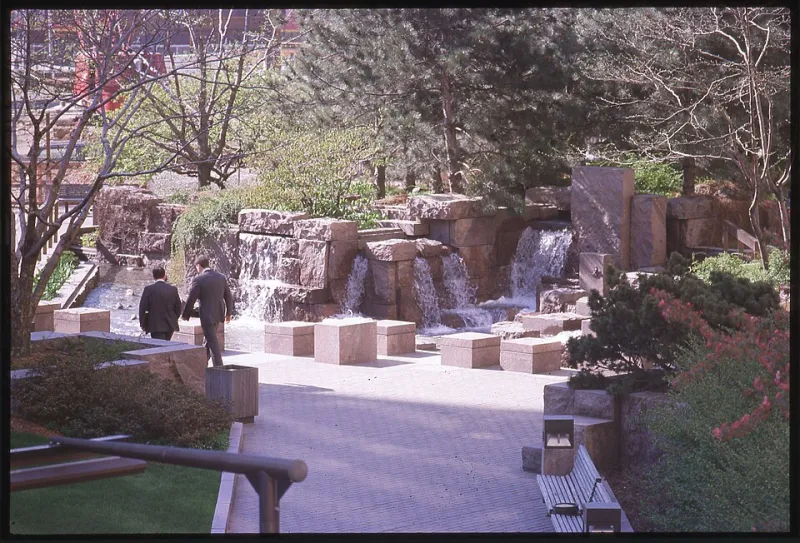
Photo: David E. Lucas, Public domain, via Wikimedia Commons
The boardroom is losing a few regulars. Not to redundancy or early retirement, but to the pavement.
Ask around any office park or co-working space and you'll find someone who's started taking their one-to-ones on foot. Small business owners in particular — the ones who answer their own emails and haven't seen a gym membership card in years — have taken to the walking meeting like nobody's business. It costs nothing, needs no kit beyond a decent coat, and it fits into the gaps a British working day already has.
But is it doing anything? Or is it just a nicer way to have a chat?
What Happens When You Walk After Eating
The timing matters more than most people realise. A short walk taken after a meal — particularly lunch, the meal most of us eat at a desk — blunts the post-meal rise in blood glucose. Muscles that are moving pull glucose out of the bloodstream to fuel themselves, which takes some of the load off insulin.
Physiologists have been banging this drum for a while. Studies on post-meal walking consistently show that even two or three minutes of gentle movement after eating flattens the glucose curve. Twenty minutes of brisk walking does considerably more.
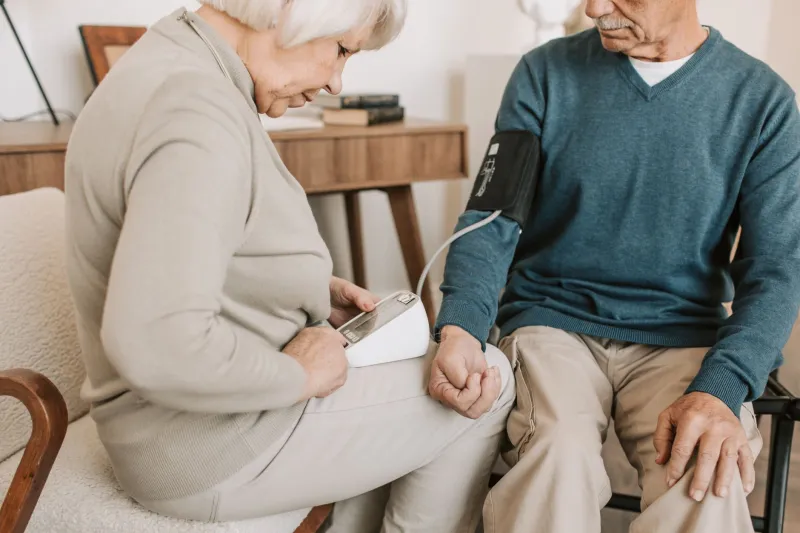
There's a blood pressure story too. Regular brisk walking — the sort where you can talk but not sing — is one of the most reliably supported lifestyle measures for keeping readings in a healthy range. And a single walk has an acute effect: blood pressure tends to sit slightly lower for a while afterwards, a phenomenon researchers call post-exercise hypotension.
GPs we spoke to are broadly in favour, with the usual caveat. "It's not a treatment," as one London GP put it. "It's a habit. But habits are what most of my patients with borderline readings actually need."
How to Build It Into a British Working Day
The walking meeting sounds lovely until you try to schedule one. A few practical rules from people who've made it stick:
Start with the low-stakes calls. Weekly check-ins, catch-ups, anything without a document to share. Save the spreadsheet-heavy stuff for the desk.
Pick your loop in advance. Twenty minutes is roughly a mile and a half at a comfortable clip. Every office and high street has one — round the block, up to the shops and back, along the canal if you're lucky. Knowing the route removes the friction.
Use the weather as an excuse, not a barrier. This is Britain. You will get rained on. A waterproof jacket lives in the cupboard under the desk now; that's just how it is.
Phone calls count. If your colleague is in Leeds, walk while you talk. The meeting doesn't care where they are.
Protect the timing. The metabolic sweet spot is straight after lunch. Even ten minutes then beats forty at 4pm.
The Fortnight Test
Here's the part worth doing yourself. Rather than taking anyone's word for it — ours included — run a simple experiment over two weeks.
Week one: carry on as normal. Take your blood pressure at the same times each day (morning and evening, seated, after five minutes of rest) and jot the numbers down. If you have a glucose meter or a CGM through a pharmacy programme, note your pre-lunch and two-hours-after readings too.
Week two: add a twenty-minute brisk walk after lunch, every working day. Keep everything else the same — same breakfast, same evening routine, same coffee habit.
Then compare. Most people notice something in the afternoon readings: the 3pm energy dip softens, and the numbers tell a similar story. Some see their evening blood pressure readings trend a few points lower. Some notice nothing dramatic — and that's useful information too, because it tells you the walking is worth doing for other reasons entirely.
Keep a note of how the walks feel as well. A cheaper watch or a phone step counter is plenty. You're looking for patterns, not precision.
A Word on Expectations
Movement is one pillar. Diet, weight, sleep, stress and — for many readers of this site — targeted nutritional support all sit alongside it. Nobody should be swapping prescribed medication for a lunchtime loop, and anyone with existing heart conditions, joint problems or very high readings should have a word with their GP or pharmacist first.
But as low-effort interventions go, the walking meeting is hard to beat. It's free, it fits around the school run, and it turns the dullest half hour of the working week into the one that's quietly doing you some good.
The boardroom will survive without you for twenty minutes. Your readings might thank you for it.