The Dark-Morning Wake-Up: What Fragmented Winter Sleep Does to the Number on Your Cuff

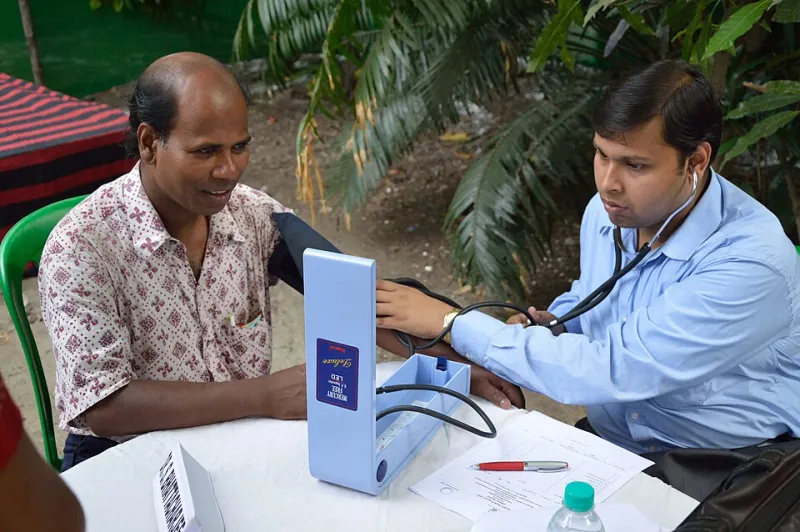
Photo: Rhagfyr, CC0, via Wikimedia Commons
There is a particular kind of winter silence at 3am. The heating has clicked off, the street is empty, and your brain has decided this is the perfect moment to replay a conversation from Tuesday. You reach for your phone. By 3.20am you have checked the weather, read three news headlines and remembered an email you did not send. By the time the alarm goes off, you feel like you have slept in a badly run hotel.
If your morning blood pressure reading looks a little higher on those days, you are not imagining it. Sleep and blood pressure are closely connected. The useful question is not whether one bad night has ruined anything. It is whether a pattern is forming.
Why 3am has a particular flavour in winter
Your body clock relies on light, routine and temperature. In winter, the mornings are dark, the evenings are long and the temptation to change pace is strong. Cortisol, one of the hormones involved in waking you up, normally rises in the early hours. If sleep is broken, the nervous system can stay in a more switched-on state, and blood pressure may not dip as smoothly overnight as it otherwise would.
That does not mean every 3am wake-up is a medical event. It means the morning cuff reading is a snapshot of a night, not a verdict on your health. A single high number after a poor night is a clue. A run of them is a pattern worth discussing.
The phone in your hand at 3am
The phone is not evil, but it is a very efficient way to tell your brain that the day has started. Light, stimulation and a small dose of outrage can all make it harder to drift back off. The same applies to checking your blood pressure at 3am. A middle-of-the-night reading is rarely taken under the same conditions as your morning one, so it can add anxiety without adding much useful information.
Try a boring rule: no cuff, no scrolling, no email. If you wake, keep the room dim, breathe slowly and give yourself twenty minutes. If sleep still will not come, get up and sit somewhere quiet rather than turning the bed into a debating chamber.
Blood sugar appetite cues the next day
Broken sleep can also nudge appetite. Ghrelin, a hormone that says eat, and leptin, a hormone that says enough, can behave differently after poor sleep. Many people notice stronger cravings for quick carbohydrates the next day — toast, biscuits, a bigger lunch. That is not a character flaw. It is a body looking for fast energy after a short night.
If you monitor blood sugar, this is a useful thing to note alongside your meals. It helps explain why a day that started at 3am can end with a plate of chips and a feeling of confusion about why.
What a morning reading can and cannot tell you
A morning reading is most useful when it is taken consistently. Sit quietly for five minutes, use a properly sized cuff, take two readings a minute apart and write them down. Do not adjust medication based on a single number. If readings are repeatedly high, or if you feel unwell, speak to your GP or pharmacist.
A simple wind-down and tracking routine
Keep the last hour before bed dim and dull. Charge your phone outside the bedroom if you can. Aim for a consistent wake time, even at weekends, and get outside for daylight when the sky is at its brightest. Caffeine after lunch is worth watching if you are sensitive. A ten-minute walk after dinner can do more for sleep than another hour of scrolling.
For tracking, keep it simple: bedtime, wake time, whether you were awake at 3am, your morning reading, and anything obvious such as a late meal or a glass of wine. After a week or two, you may see a pattern rather than a collection of annoying nights. That is far more useful than a perfect spreadsheet.
Where natural support fits
Products such as Glycoforte are marketed as natural support for healthy blood pressure and blood sugar, and they sit alongside the basics rather than replacing them. Sleep is still the foundation. If winter insomnia is persistent, speak to your GP. If it is occasional, treat it as information: your morning number may be telling you about your night, not just your arteries.