Beyond the Gravy Jug: Where Christmas Dinner Salt Really Hides
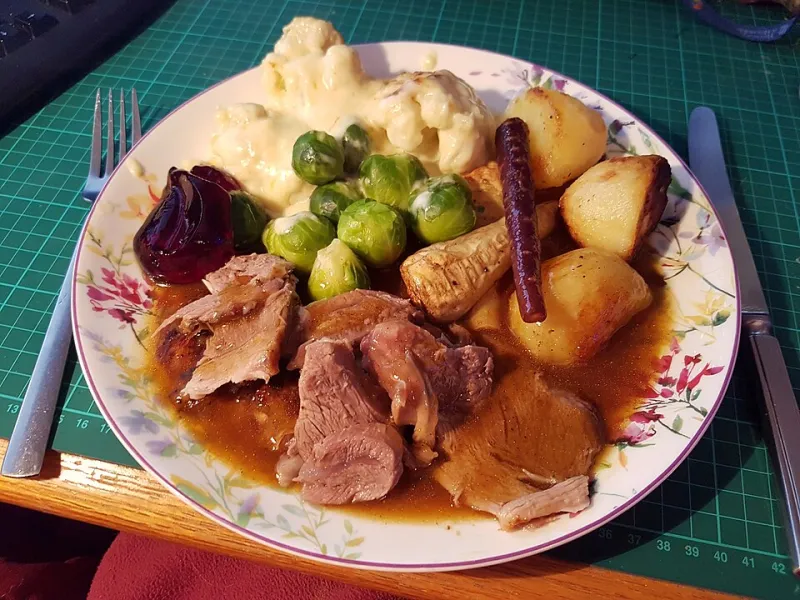
Photo: CharmaineZoe's Marvelous Melange from England, CC BY 2.0, via Wikimedia Commons
Every Christmas dinner has a moment when someone reaches for the gravy jug and someone else says, 'Go on then, just a bit.' The gravy is the visible villain. It is the thing you pour, the thing that pools on the plate, the thing that makes the whole meal feel complete. But if you are managing blood pressure, the gravy boat is only part of the story.
The salt in a Christmas dinner is spread across the plate in ways that are easy to miss. It is in the stock cube that went into the gravy, the sausage meat in the stuffing, the bacon around the pigs in blankets, the salted butter on the carrots, the bread sauce, the crackers, the cheese board and the pickles. None of those things is a problem on its own. Together, they can add up to a lot more sodium than you would guess from taste alone.
At BloodPressureGlycoforte UK, we are not here to police your plate. Christmas dinner is a meal, not a clinical event. But if you have been told to watch your salt, or if your home readings have been creeping up, it helps to know where the salt is actually coming from.
The salt map of the Christmas plate
Start with the gravy. It usually contains stock cubes or granules, which are salty by design, plus the juices from the roasting tin and often extra salt at the end. Then look at the stuffing. If it contains sausage meat, bacon or a stock-based liquid, it is carrying salt. Pigs in blankets are salted twice — once in the sausage and once in the bacon. Bread sauce often has salt in the bread, the milk and the seasoning. Even the roast potatoes may have been parboiled in salted water and then sprinkled with sea salt flakes because that is what the recipe said.
Then there is the cold spread later in the day. Cheese, crackers, olives, pickled onions, smoked salmon and crisps are all high-salt foods that tend to appear while the TV is on and nobody is measuring anything. That is the part of Christmas Day that often catches people out: not the main meal, but the grazing afterwards.
Why salt matters to the cuff
Sodium helps your body hold on to fluid. For some people, a high-salt diet pushes blood pressure up, and reducing salt can help bring it down. The effect varies from person to person, and one Christmas dinner will not decide your long-term health. But the pattern across December matters. If every weekend brings a roast, a takeaway, a cheese board and a ham sandwich, the salt adds up.
Blood pressure readings are also sensitive to timing and circumstances. A reading taken an hour after a salty meal, when you are full and sitting on the sofa, is not the same as a rested morning reading. Do not panic at a single number. Look at the trend.
Taste-test, don't guess
One of the simplest ways to cut salt without ruining the meal is to taste before you add. Gravy is a good place to start. If you are making it from scratch, use a lower-salt stock, cook the onions slowly, and lean on herbs rather than another pinch of salt. Sage, thyme, black pepper and a splash of Worcester sauce can add depth. If you are using granules, use less than the packet suggests and taste as you go.
Stuffing benefits from the same approach. Use good sausage meat and let the herbs do the work. If you are making a vegetarian version, use mushrooms, celery and onion for savoury depth rather than extra stock. Pigs in blankets can be made with unsmoked bacon and smaller chipolatas, or you can simply have fewer of them and enjoy them more.
The swap shelf: practical tweaks
You do not need to reinvent Christmas. A few small swaps can make a noticeable difference:
- Choose a lower-salt stock for gravy and stuffing.
- Use unsalted butter for vegetables and mash.
- Put the salt cellar away from the table so it is not a reflex.
- Serve gravy in a smaller jug, and let people add their own.
- Add a bowl of plain steamed greens or carrots to the plate. They give you volume without salt.
- Keep the cheese board for later and put out a smaller amount rather than the whole block.
- Rinse olives and pickles if you are sensitive to salt. It sounds odd, but it helps.
The post-dinner walk
A walk after Christmas dinner is a British tradition for a reason: it gets you out of the house, away from the tin of Quality Street, and into the cold air. It also helps your body handle the meal. Gentle movement after eating can support blood sugar control and circulation. It does not cancel out a salty plate, but it is a useful habit.
Even ten minutes around the block counts. If the weather is grim, walk up and down the stairs a few times or do a lap of the garden. The point is to move, not to punish yourself.
Reading your numbers around Christmas
If you monitor at home, try to keep your routine. Take your reading at the same time, in the same chair, with the same arm, and after five minutes of rest. Do not take a reading straight after a big meal or a glass of wine and then worry about it. The useful reading is the one you can compare with the rest of the month.
If you are considering natural support alongside a sensible diet, Glycoforte is one option people ask about for healthy blood pressure and blood sugar support. It is not a substitute for medication or medical advice. Think of it as part of a wider routine that includes watching salt, moving more and keeping an eye on your numbers.
A realistic Christmas plate
You can enjoy Christmas dinner and still look after your blood pressure. Have the gravy. Have a pig in a blanket. Just notice the salt that comes from everywhere else on the plate, and make a few quieter choices around the edges. The gravy boat is not the whole story — and neither is one meal. It is the pattern across the season that matters.